 Air Cargo
  Inland Freight
  Project Cargo
  Industrial Equipment
  Energy Equipment
  Medical Equipment
  Global Supply Chains
  Cars and Motorcycles
  Yachts and Boats
  Aircrafts and Helicopters
  Construction Equipment
  Agricultural Equipment Shipping
  Moving & Relocations
  Cargo Insurance
  Equipment Rigging & Crating
  Export / Import Consulting
  Customs Clearance
  About Us
 Contacts
 Careers
 Get a quote


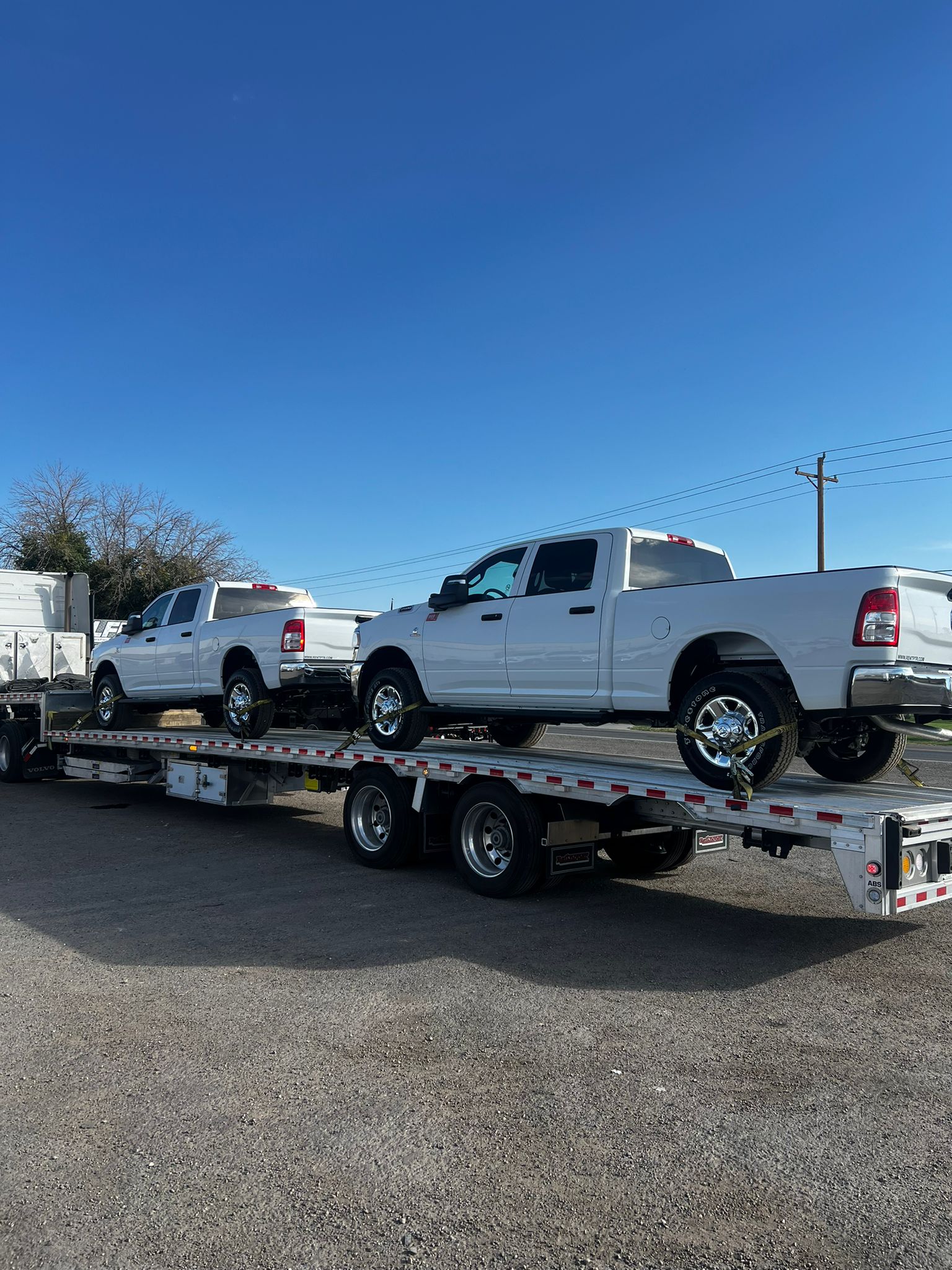
This project involved the export of two brand-new Dodge RAM 2500 HD Crew Cab pickup trucks from the United States to Aktau Port, Kazakhstan, for a commercial buyer acquiring American-spec heavy-duty work trucks unavailable on the local market.
Both trucks — finished in Bright White — are the HD 2500 variant with the Crew Cab configuration, featuring a 6.4L HEMI V8, four-wheel drive, and full towing packages. Each truck weighs approximately 6,800 lbs and measures roughly 20 feet in length. For the inland leg, both units were loaded together onto a 48-foot flatbed trailer using drive-on ramps, secured with wheel straps and axle chains. Photos show the vehicles in a staging area near Nevada/Utah, consistent with a dealer delivery or auction pickup in the Mountain West region.
From there, the trucks were transported to the Port of Baltimore for Roll-on/Roll-off (Ro-Ro) ocean export — the preferred method for wheeled vehicles, as it eliminates crane handling and reduces damage risk.
Export compliance included:
- Title verification and export title processing (Maryland DMV)
- EEI/AES filing with Schedule B code for passenger/commercial vehicles
- Bill of Lading and Commercial Invoice
- Odometer disclosure statements
- Coordination with Kazakh importer for customs pre-clearance at Aktau
Transit from Baltimore to Aktau via the Caspian Sea route (typically via Poti, Georgia → rail or road to Kazakhstan) was coordinated by our regional partners. The buyer received both trucks in showroom condition.
Demand for U.S.-spec RAM 2500 and F-250 trucks in Central Asia is growing — American heavy-duty pickups are prized for their towing capacity and durability in remote conditions. SEAVOLK regularly handles vehicle exports to Kazakhstan, Azerbaijan, Georgia, and Uzbekistan.