phone
get a quote
callback

School BUS Transportation

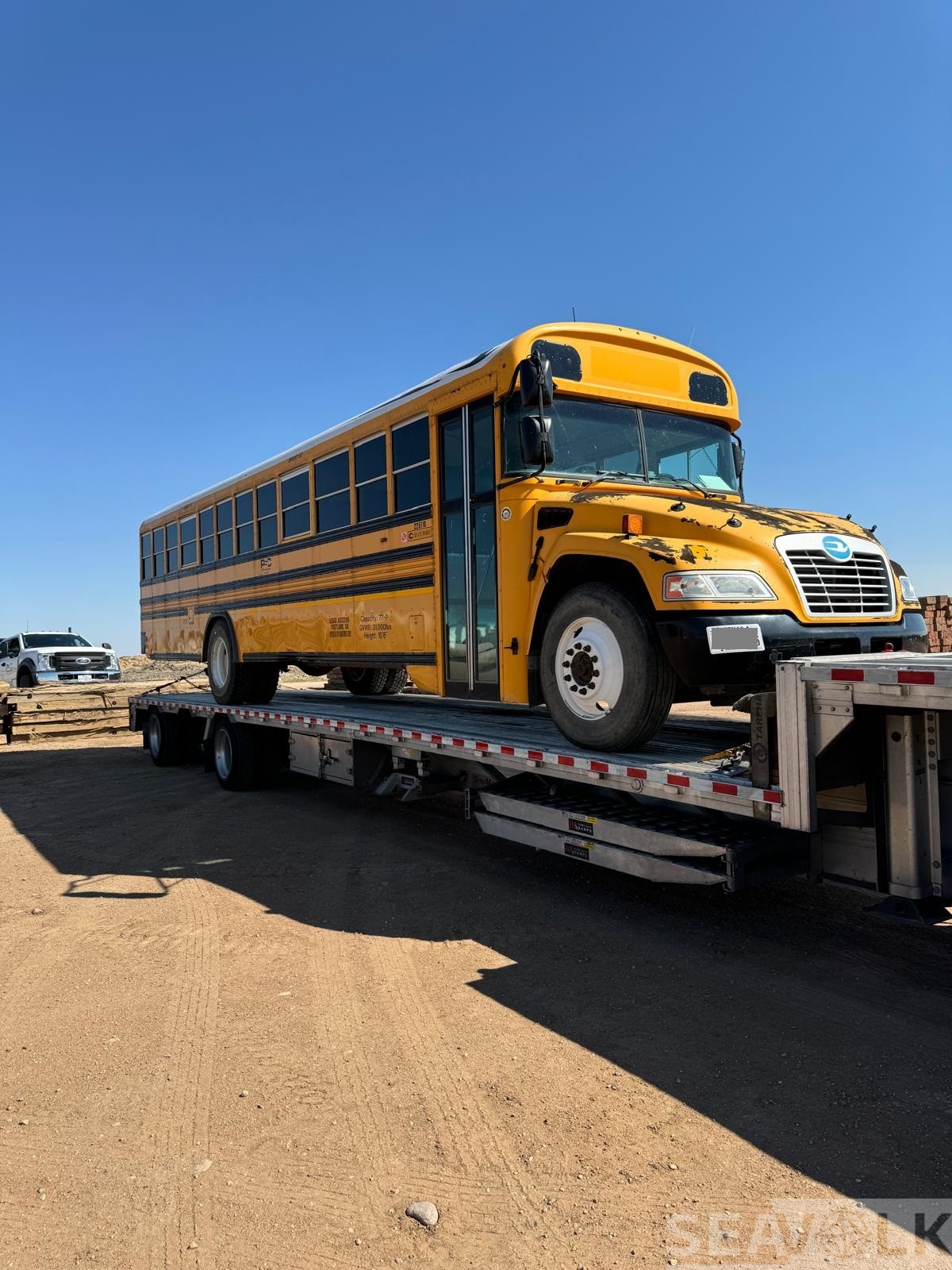
From Oklahoma to Nicaragua: How We Shipped a Used School Bus.
We were recently approached by a client who had purchased a used school bus at an auction in Oklahoma and needed to transport it all the way to Nicaragua. The request required a full-service logistics solution — from domestic pickup in the U.S. to final delivery in Central America.

The project began with a detailed route assessment and cost breakdown. At the initial stage, we partnered with a trusted carrier who provided a step-deck trailer — ideal for moving oversized vehicles like buses. The bus was safely loaded and transported from Oklahoma to the Port of Houston, a major hub for international shipping to Latin America.

Once at the port, our team took over the export documentation process, including vehicle title verification, customs paperwork, and booking the vessel. For the ocean leg of the journey, we used a RoRo (Roll-on/Roll-off) vessel — the most secure and efficient method for shipping drivable units. This eliminated the need for containerization or dismantling, and minimized handling risks.

The bus was shipped from the Port of Houston directly to the Port of Corinto, Nicaragua, the country’s main commercial seaport. Throughout the transit, we maintained communication with the client, providing real-time updates and documentation tracking.

Upon arrival in Corinto, we coordinated with local customs agents to ensure smooth clearance. We also assisted the client in arranging final delivery from the port to the buyer’s location within Nicaragua. Our goal was to provide not just transportation, but full-cycle support — and that’s exactly what we delivered.

Thanks to careful planning, trusted partners, and transparent communication, the project was completed on time and without complications. The client received their vehicle in excellent condition, ready for its new chapter on the roads of Nicaragua.
Ambulance Van Transportation

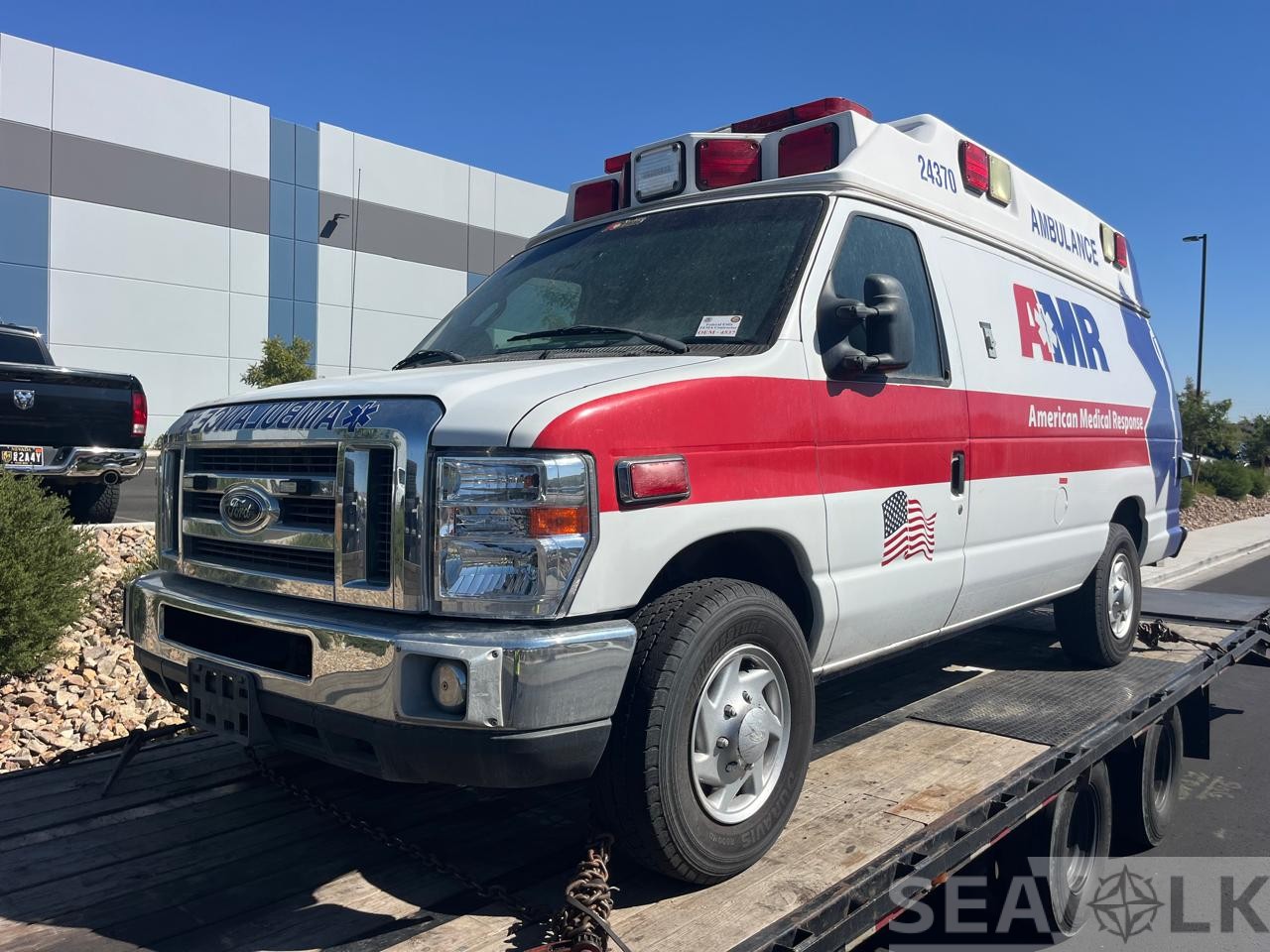
Recently, our team successfully completed a domestic delivery of a Ford E-350 ambulance from Utah to Pennsylvania. This was a specialized project that required careful planning and the right equipment to ensure safe and efficient transport.

After speaking with the client, we determined that the best method for this move was to use a lowboy trailer known as a hotshot. This type of trailer is ideal for oversized vehicles like ambulances, as it allows for safe loading and transportation without modifications or disassembly. Hotshot trailers are also great for long-distance hauls thanks to their flexibility and quicker transit times.

Before pickup, we made sure all necessary paperwork was in order. This included verifying the vehicle title and preparing a detailed Bill of Lading that listed all transport specifics. Given the size and weight of the Ford E-350 in its fully equipped ambulance form, accurate documentation and compliance with state and federal transport regulations were essential.

The route covered nearly 2,000 miles and was planned to minimize delays and ensure road safety. Throughout the journey, our driver stayed in constant communication, and we provided the client with regular updates on the ambulance’s location and status. Loading and unloading were handled with precision, thanks to the experience of our team and the design of the hotshot trailer.

The ambulance arrived in Pennsylvania right on schedule and in perfect condition. The client was impressed by the smooth process, clear communication, and the care taken with such a valuable vehicle. For us, this project was another great example of how we handle complex and unique transportation jobs with professionalism and attention to detail.

Military Equipment Shipping

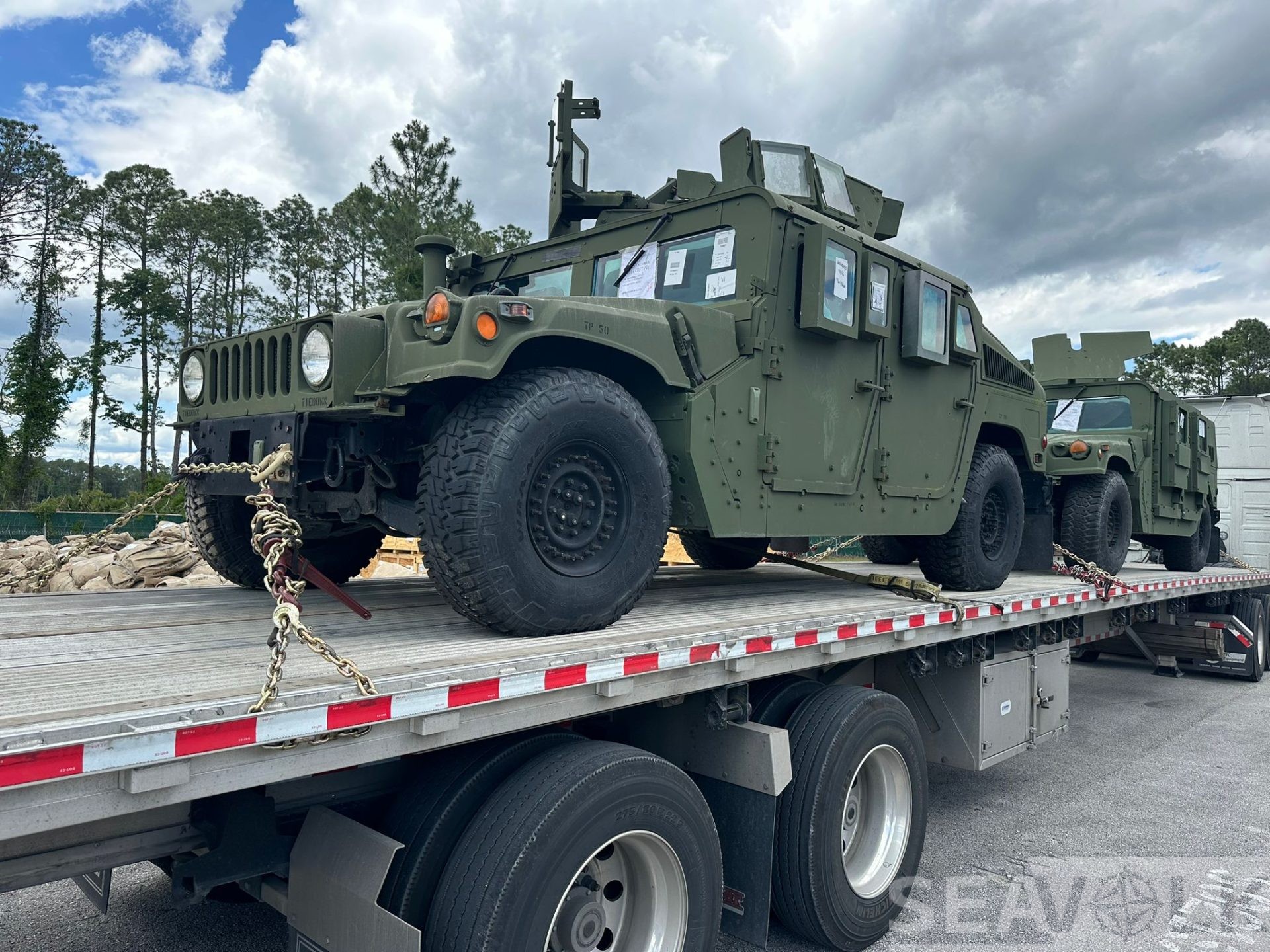
Moving a group of military Humvees isn’t just about logistics — it’s about discipline, coordination, and handling high-value assets with the respect they deserve. When we were called on to arrange transport for several HMMWVs (High Mobility Multipurpose Wheeled Vehicles), we understood the assignment from the jump: no errors, no delays, and absolutely no leaks.

Each Humvee in the convoy weighed in at roughly 7,500 lbs (3,400 kg), with a length of about 15 feet, a width of 7 feet, and a height of just over 6 feet. These were M998-series units, fully outfitted for tactical operations — including reinforced armor, blackout systems, and GPS/radio comms — and were fully operational for self-loading and offloading, a key requirement for Ro-Ro (Roll-on/Roll-off) shipping.

Domestic pickups took place at multiple secure locations. Because this was military cargo, every U.S. driver we dispatched was required to hold a TWIC (Transportation Worker Identification Credential) — allowing access to military bases and restricted zones within ports. No TWIC, no job. Period.

Once all vehicles were staged at a secure East Coast port, we coordinated Ro-Ro shipping with a government-approved ocean carrier. Ro-Ro was chosen not just for efficiency, but for minimizing the chance of damage. No lifting by crane, no disassembly — just straight roll-on using the vehicles’ own power, which was verified by our team prior to shipment.

Export paperwork was handled in-house and reviewed multiple times to ensure compliance with all regulations. This included:

  • Bill of Lading

  • ITAR registration and filing

  • Military End Use Statement

  • ECCN classification

  • Shipper’s Letter of Instruction (SLI)

  • Customs Power of Attorney for release

As for their final destination? Classified. All we can say is the vehicles were delivered safely overseas, received by authorized personnel, and are now active where they’re needed most.

In missions like this, precision is everything. And that’s exactly what we bring — from the first mile to the last.

Cars