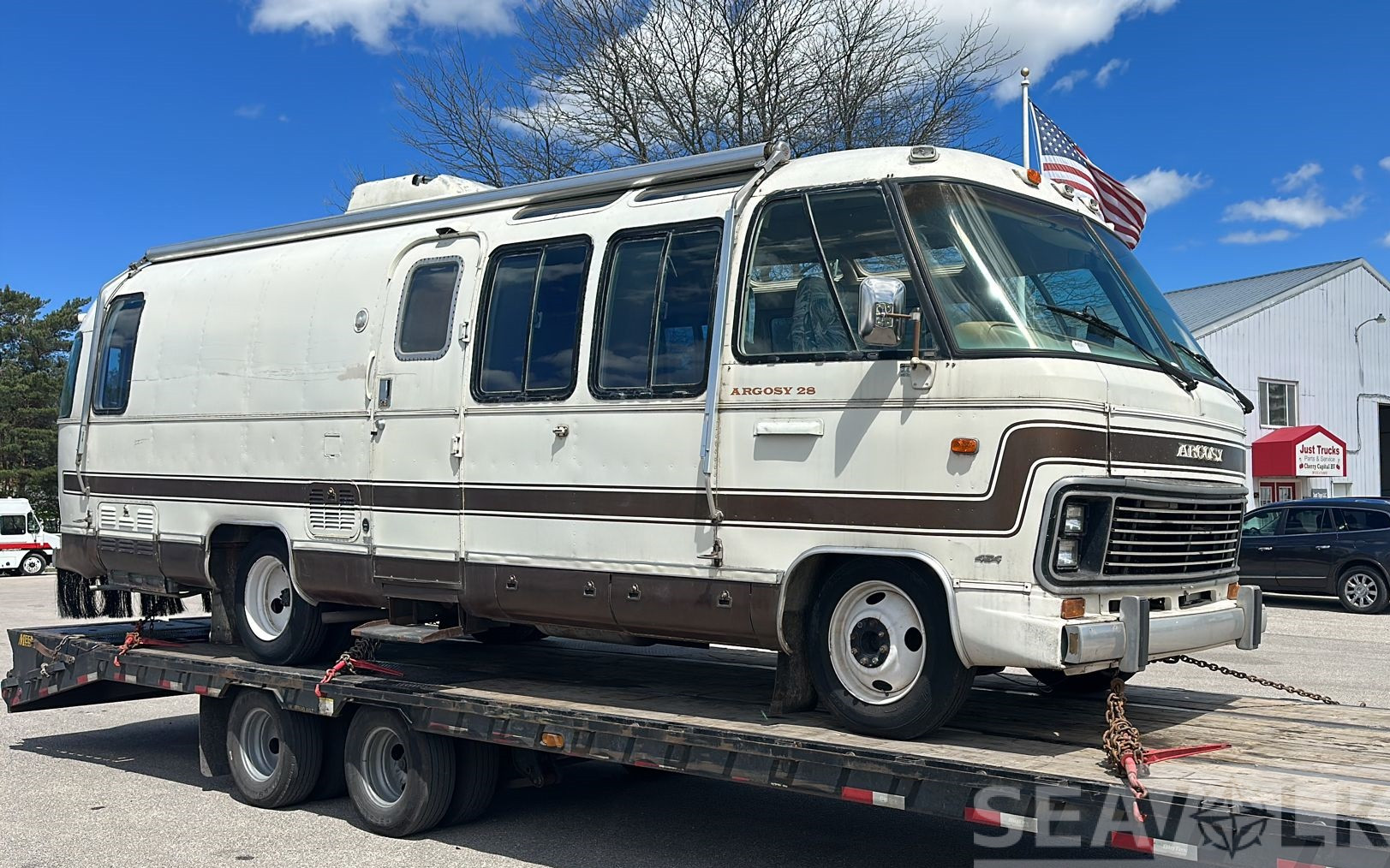
Not every shipment is a piece of heavy machinery. This project brought us one of our most distinctive loads — a 1978 Argosy 28 motorhome, a vintage American RV with a devoted following among classic vehicle collectors in Europe.
The Argosy 28, manufactured by Airstream under the Argosy brand, features the signature aluminum-clad body on a GMC chassis with a 454 V8 engine. At 28 feet long and approximately 12,000 lbs, it required a step-deck flatbed trailer for domestic transport. The unit was picked up from a dealer lot in Traverse City, Michigan (as seen by the “Just Trucks — Cherry Capital” signage in the background), and transported to the Port of Baltimore for ocean export.
Given the vehicle’s age and non-running status at time of export, special handling was required:
Winch-loading onto the trailer (no self-drive capability)
Battery disconnect and fuel system verification
Soft-tie securing to avoid damage to the aluminum body panels
ISPM-15-compliant wood blocking for port delivery
For ocean transport, the motorhome was shipped via Ro-Ro vessel to the Port of Bremerhaven, Germany — Europe’s primary Ro-Ro hub for American vehicle imports. Export documentation included a clear title, EEI filing, and an inspection letter confirming the vehicle was free of soil and biological matter (required for EU agricultural compliance).
Our German forwarding partner arranged customs clearance and VAT processing on arrival. The buyer — a vintage vehicle enthusiast — received the Argosy in the same condition it left Michigan.
Classic American RVs are highly sought after in Germany, the Netherlands, and Scandinavia. If you’re exporting a vintage motorhome, camper, or collector vehicle from the U.S., SEAVOLK handles the full process.
From Oklahoma to Nicaragua: How We Shipped a Used School Bus.
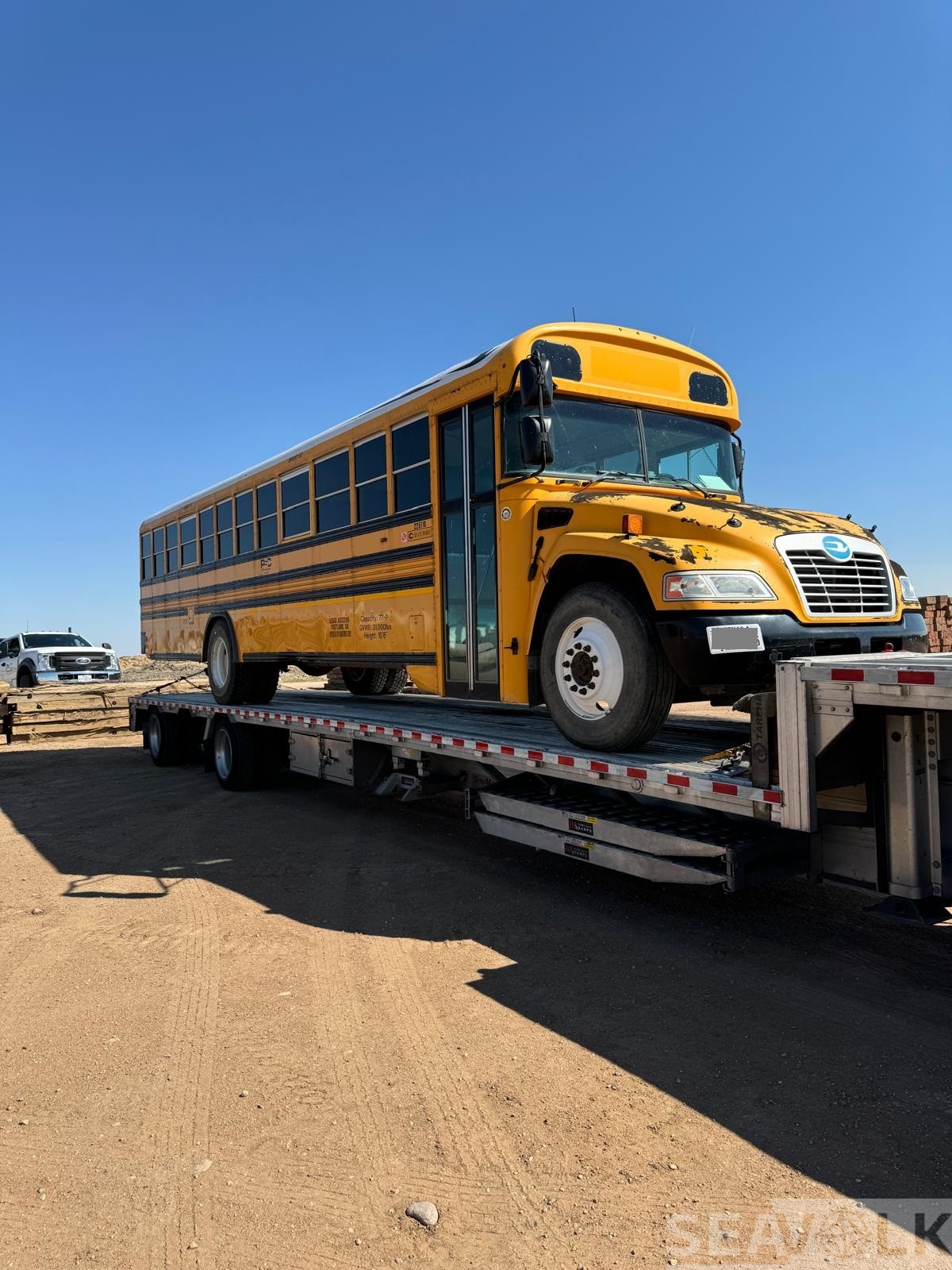
We were recently approached by a client who had purchased a used school bus at an auction in Oklahoma and needed to transport it all the way to Nicaragua. The request required a full-service logistics solution — from domestic pickup in the U.S. to final delivery in Central America.
The project began with a detailed route assessment and cost breakdown. At the initial stage, we partnered with a trusted carrier who provided a step-deck trailer — ideal for moving oversized vehicles like buses. The bus was safely loaded and transported from Oklahoma to the Port of Houston, a major hub for international shipping to Latin America.
Once at the port, our team took over the export documentation process, including vehicle title verification, customs paperwork, and booking the vessel. For the ocean leg of the journey, we used a RoRo (Roll-on/Roll-off) vessel — the most secure and efficient method for shipping drivable units. This eliminated the need for containerization or dismantling, and minimized handling risks.
The bus was shipped from the Port of Houston directly to the Port of Corinto, Nicaragua, the country’s main commercial seaport. Throughout the transit, we maintained communication with the client, providing real-time updates and documentation tracking.
Upon arrival in Corinto, we coordinated with local customs agents to ensure smooth clearance. We also assisted the client in arranging final delivery from the port to the buyer’s location within Nicaragua. Our goal was to provide not just transportation, but full-cycle support — and that’s exactly what we delivered.
Thanks to careful planning, trusted partners, and transparent communication, the project was completed on time and without complications. The client received their vehicle in excellent condition, ready for its new chapter on the roads of Nicaragua.


 Air Cargo
  Inland Freight
  Project Cargo
  Industrial Equipment
  Energy Equipment
  Medical Equipment
  Global Supply Chains
  Cars and Motorcycles
  Yachts and Boats
  Aircrafts and Helicopters
  Construction Equipment
  Agricultural Equipment Shipping
  Moving & Relocations
  Cargo Insurance
  Equipment Rigging & Crating
  Export / Import Consulting
  Customs Clearance
  About Us
 Contacts
 Careers
 Get a quote